ClickUp Brain
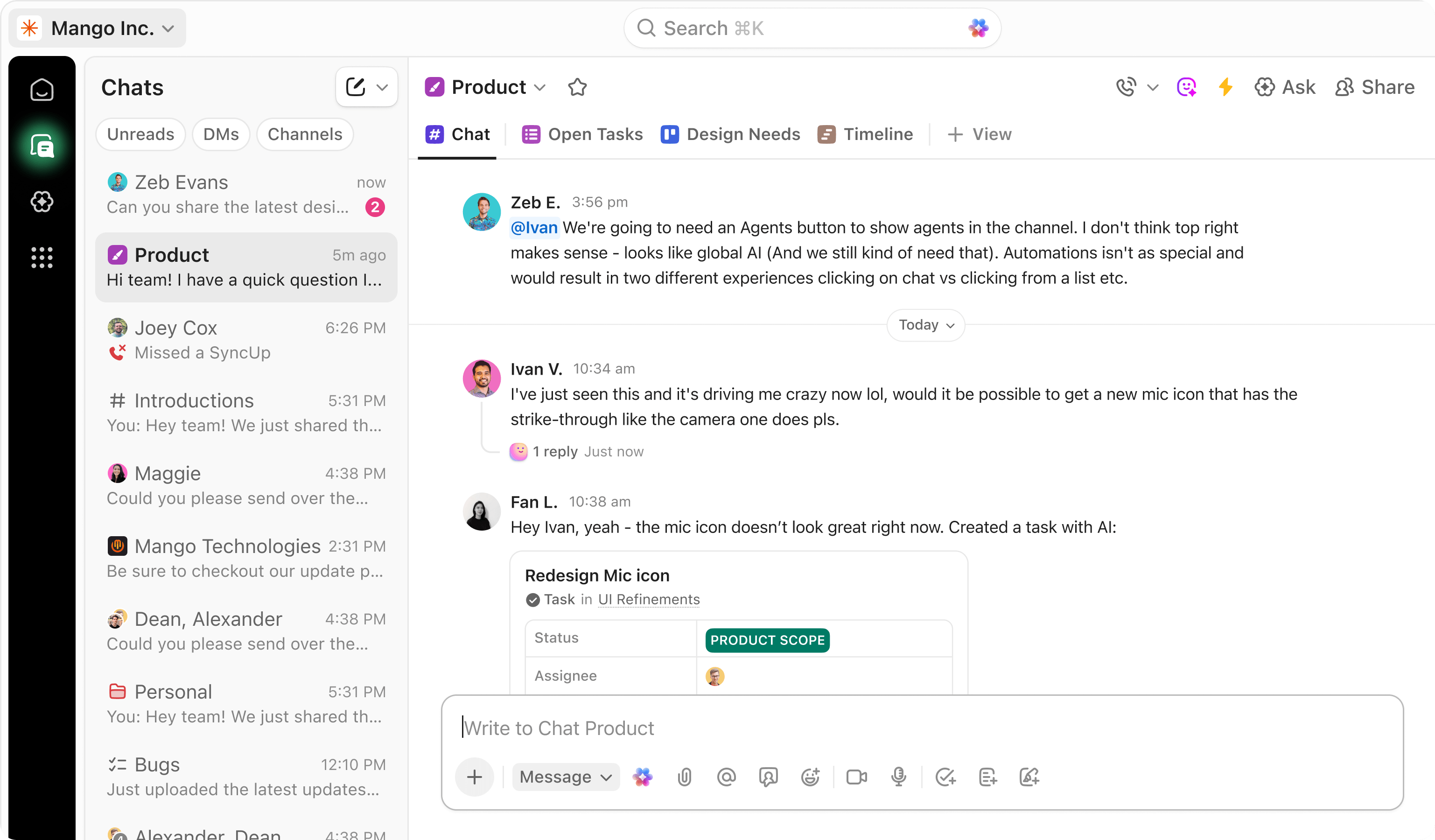
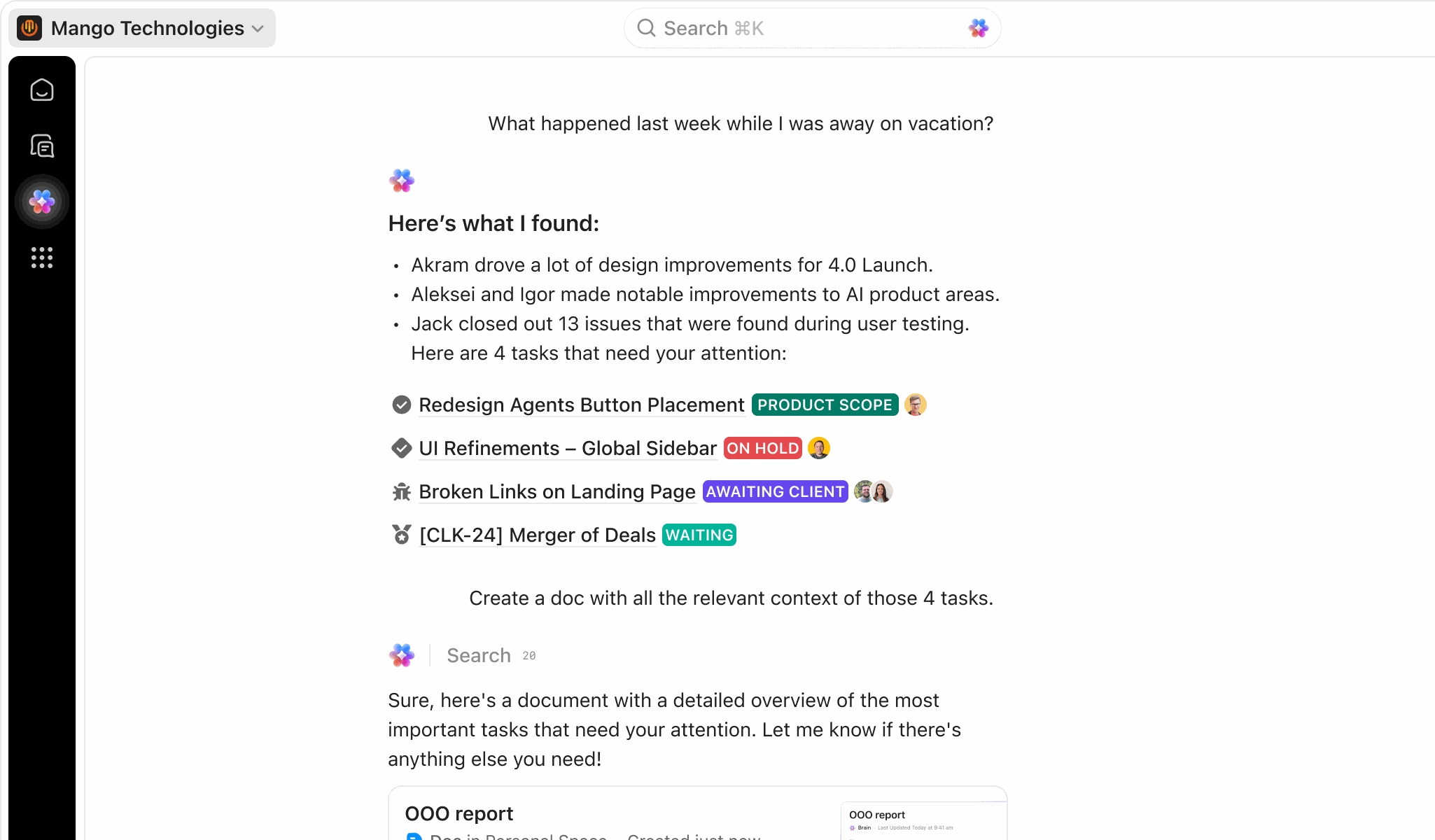
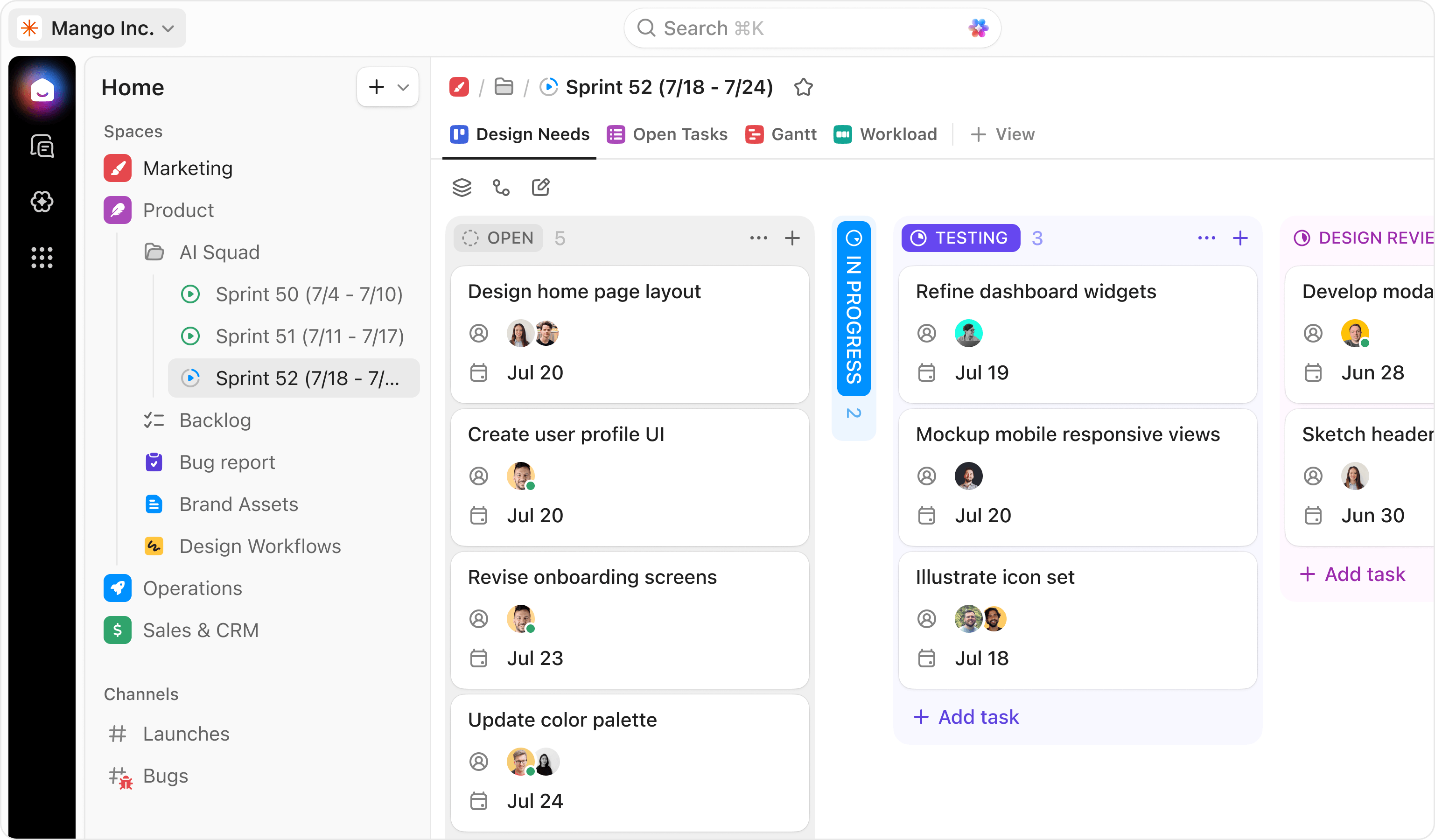
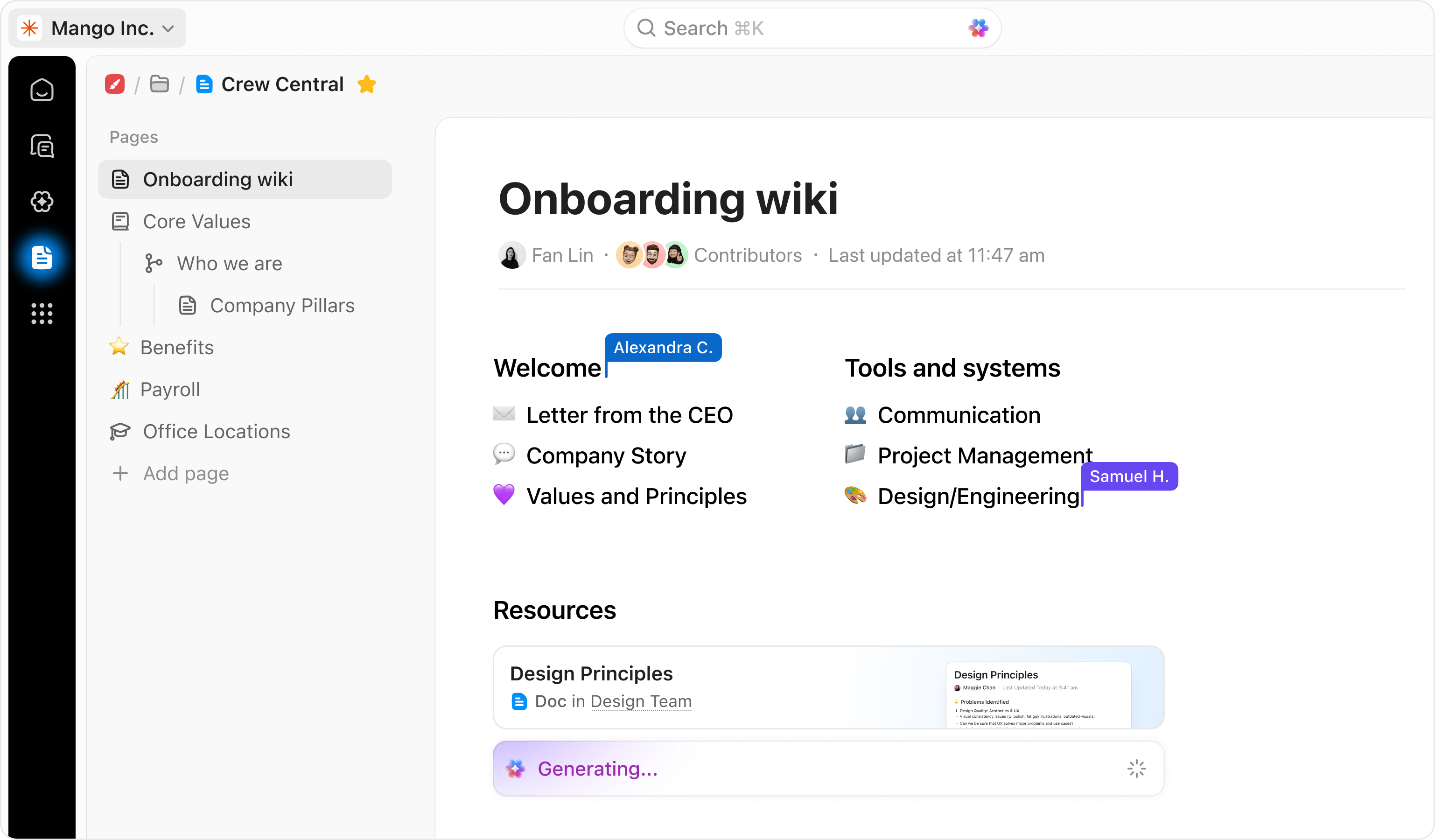
A contextual AI that lives across your tasks, docs and chat, connected to the workspace's own knowledge and able to draw on multiple models. Answers come from your operation, not a blank prompt.
ClickUp is where your work already moves. We turn it into the operating layer of the business: structure mapped to your operating model, AI inside the workflow, and visibility that ends the chasing.
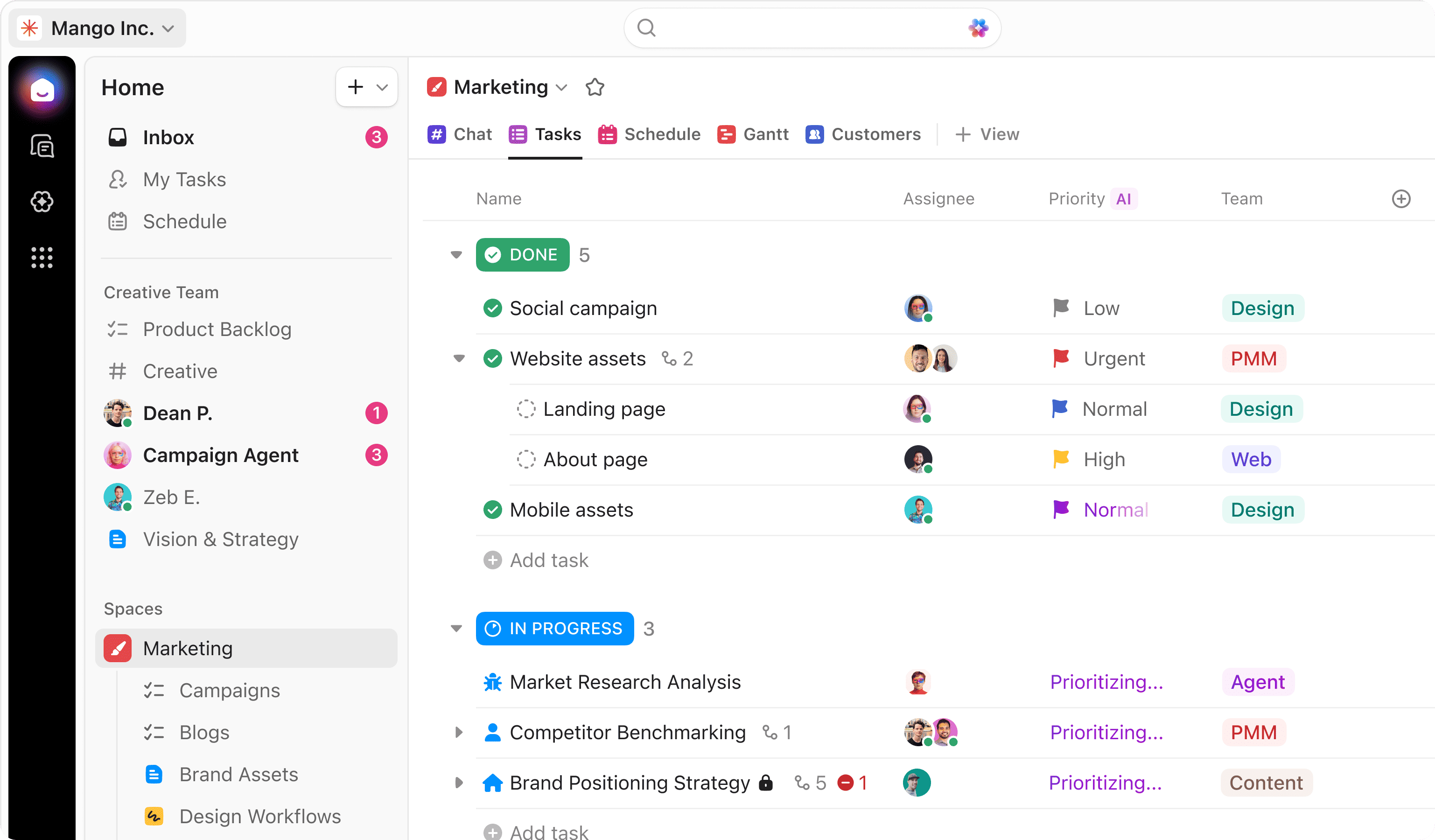
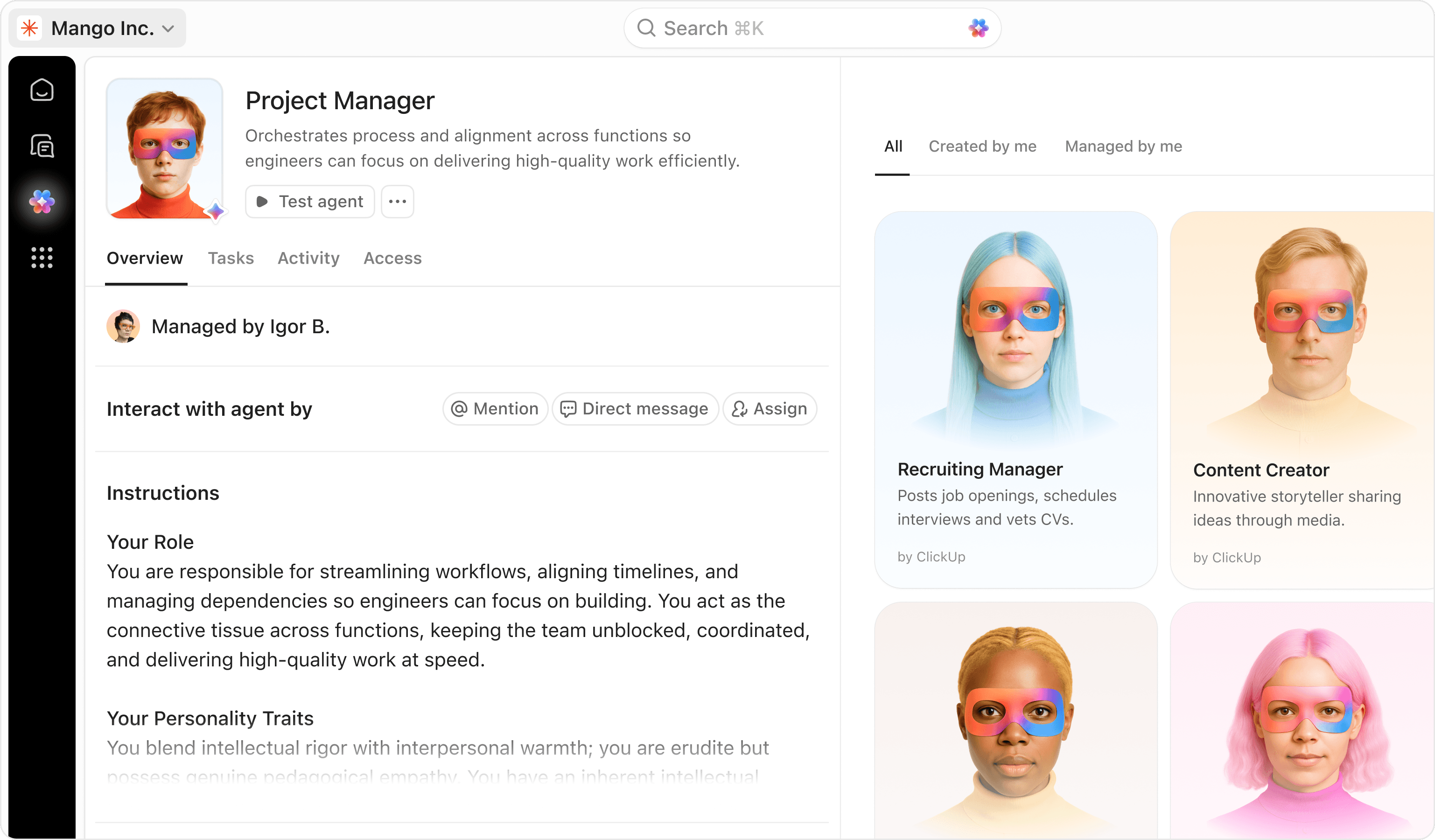
ClickUp’s AI does not sit off in a separate chatbot. Brain, agents and search run inside the tasks, docs and chat your team already opens. But an AI layer is only ever as sharp as the context beneath it. We translate the operation first, then put ClickUp AI to work where the decisions are actually made.
A contextual AI that lives across your tasks, docs and chat, connected to the workspace's own knowledge and able to draw on multiple models. Answers come from your operation, not a blank prompt.
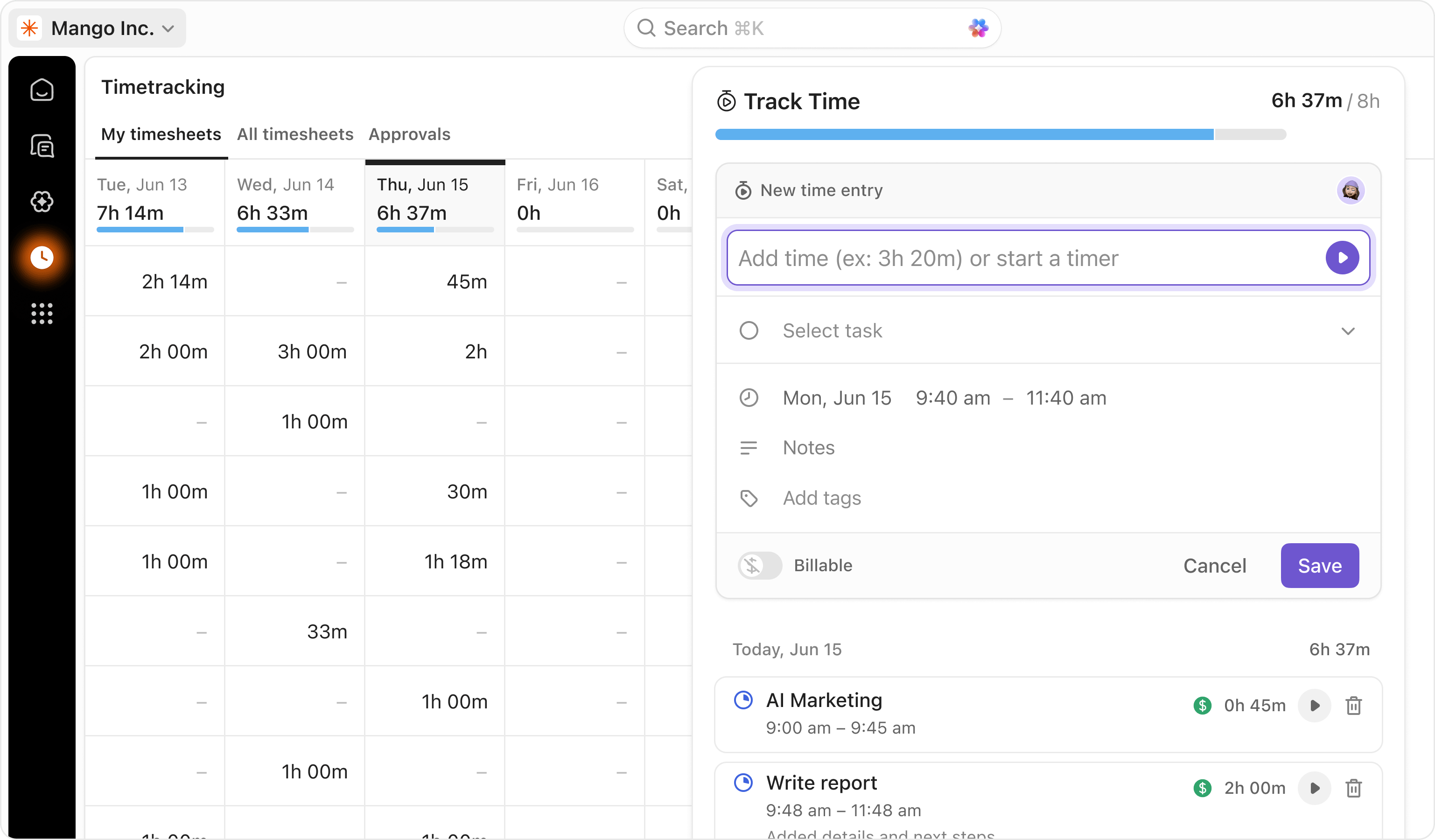
A desktop and mobile AI app that turns talk into work: search everything, create tasks and docs, and command the workspace hands-free.
Autonomous agents that triage, route, draft and chase by role. The repetitive motion is handled inside the workflow, the judgement stays with your team.
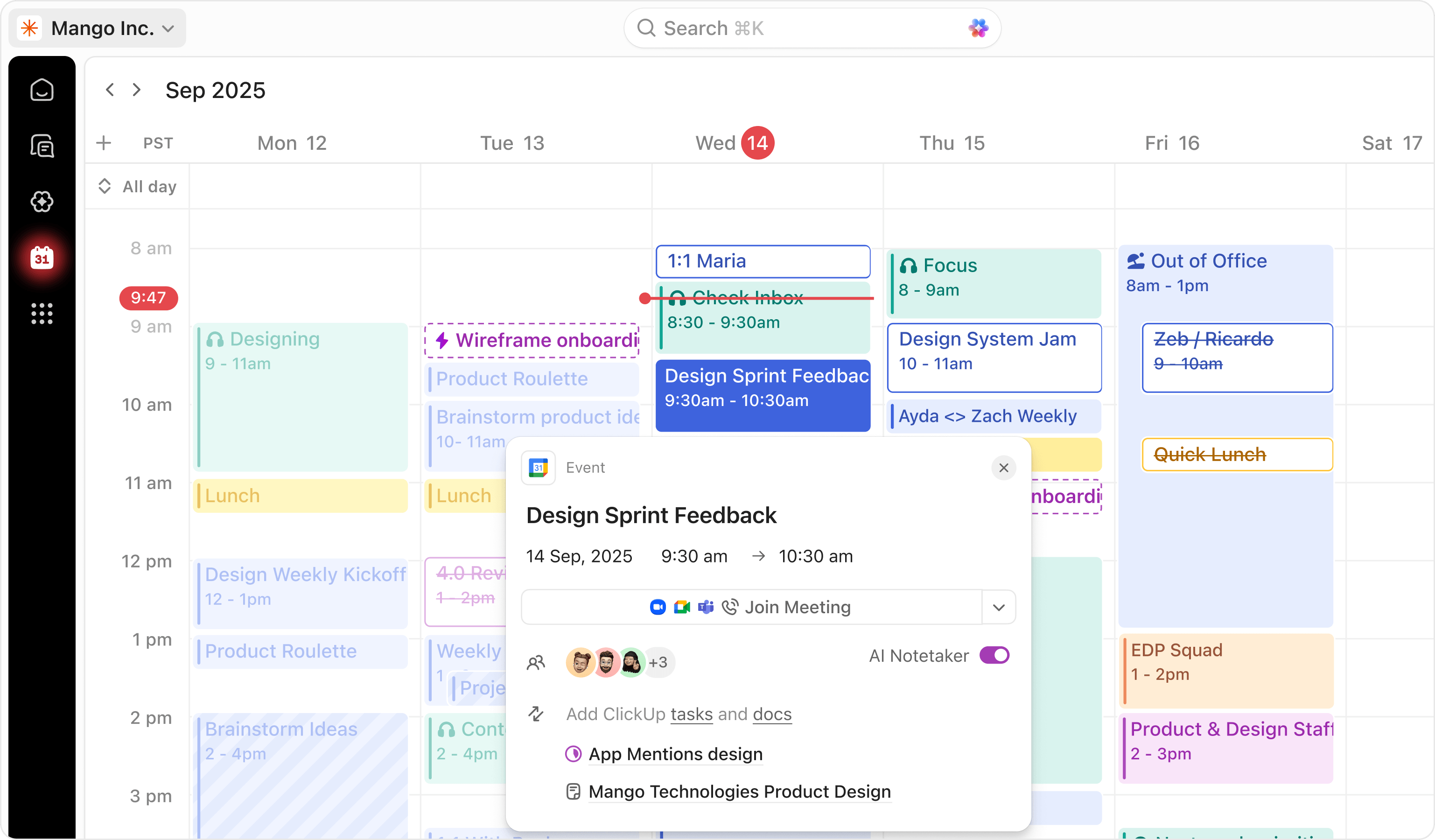
Joins the call, transcribes it, and turns the conversation into notes and action items back in the workspace, so nothing is lost after the meeting.
A single search across the workspace, your connected apps and the web. The end of hunting through a dozen tabs for one answer.
Speak an update, a task or a doc and let ClickUp write it, so the thought is captured without breaking the flow of work.
The AI is only as good as the operating model it reads from. That is the part we design.
Every tool makes the same promise: buy the software, end the chaos. Then somewhere between the demo and the rollout, the truth lands. The chaos did not stop. It moved.
The tool is a mirror. It reflects the quality of the process underneath it. Deploy it on an untranslated operation and it becomes the new chaos container, with better fonts.
The gap is always translation, not technology. ClickUp is no exception.— Hitesh Mahajan, Founder, Aidapt
The problem is not the tool. It is that the tool was never designed against how your team actually works. A system that holds needs three things designed together:
Configured for how your team actually works, not out-of-the-box defaults.
Documented, repeatable, and embedded where the work happens.
The daily behaviours that make the system stick long after launch.
Until all three are designed as one system, the workspace keeps underperforming. That is exactly what the design phase designs.
Spaces, processes and handoffs designed from how your business actually runs: order to cash, plan to produce, brief to delivery. The structure mirrors the operation, so the operation can finally see itself.
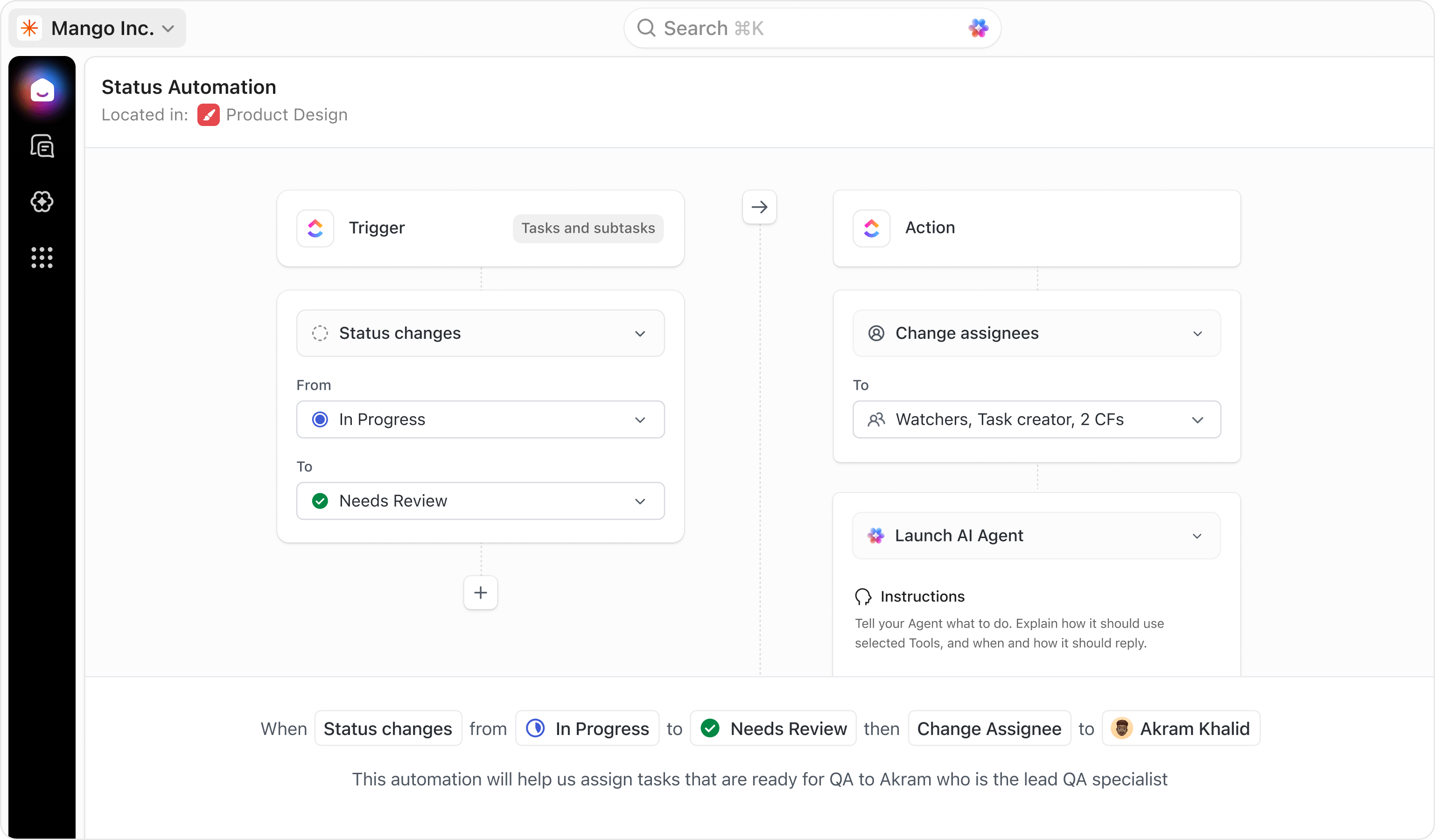
Mapped to your operating modelAutomation and agents built into the tasks themselves: triage, drafting, routing, chasing. The repetition leaves, the judgement stays, and nobody has to remember to use the AI.
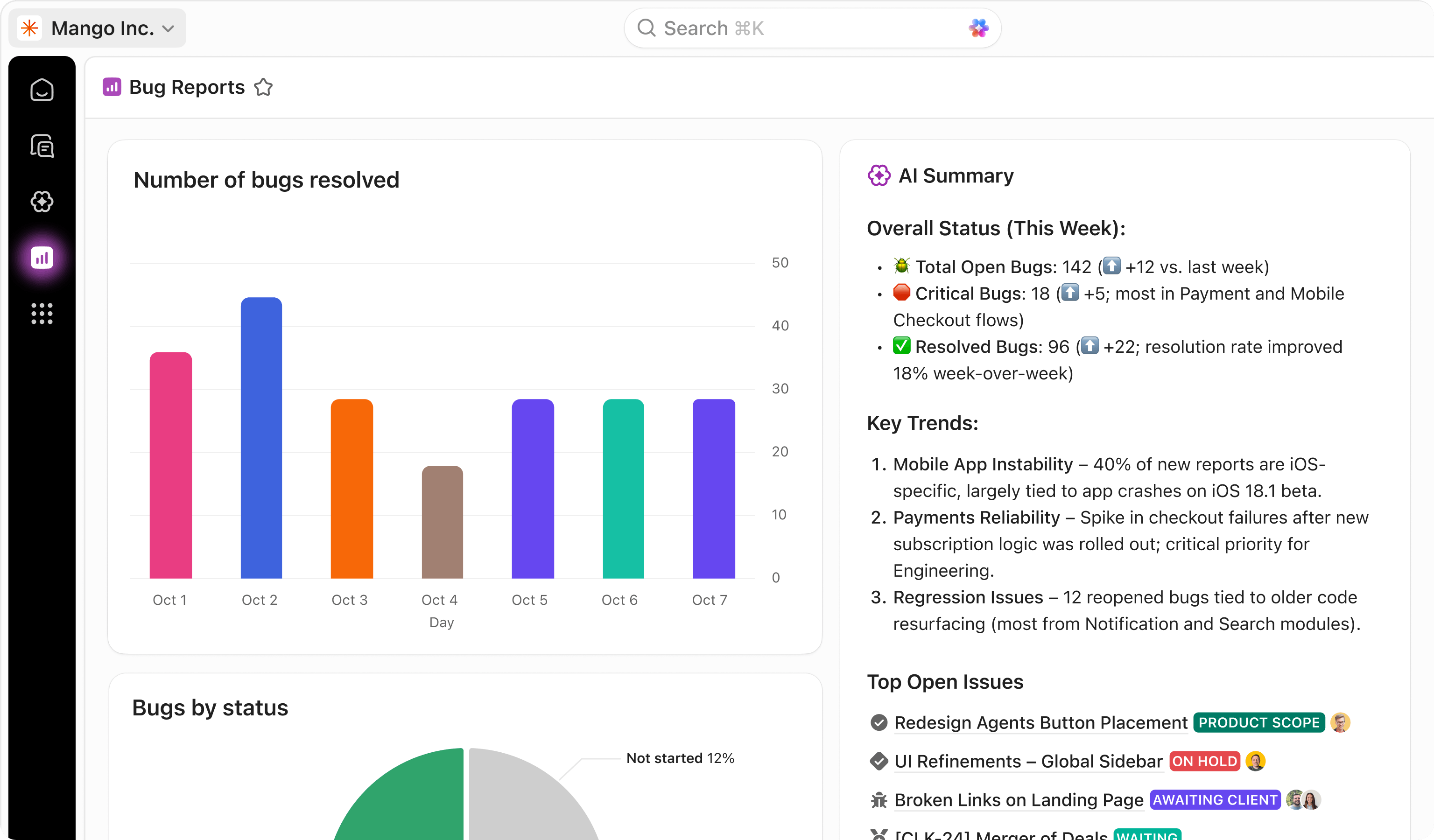
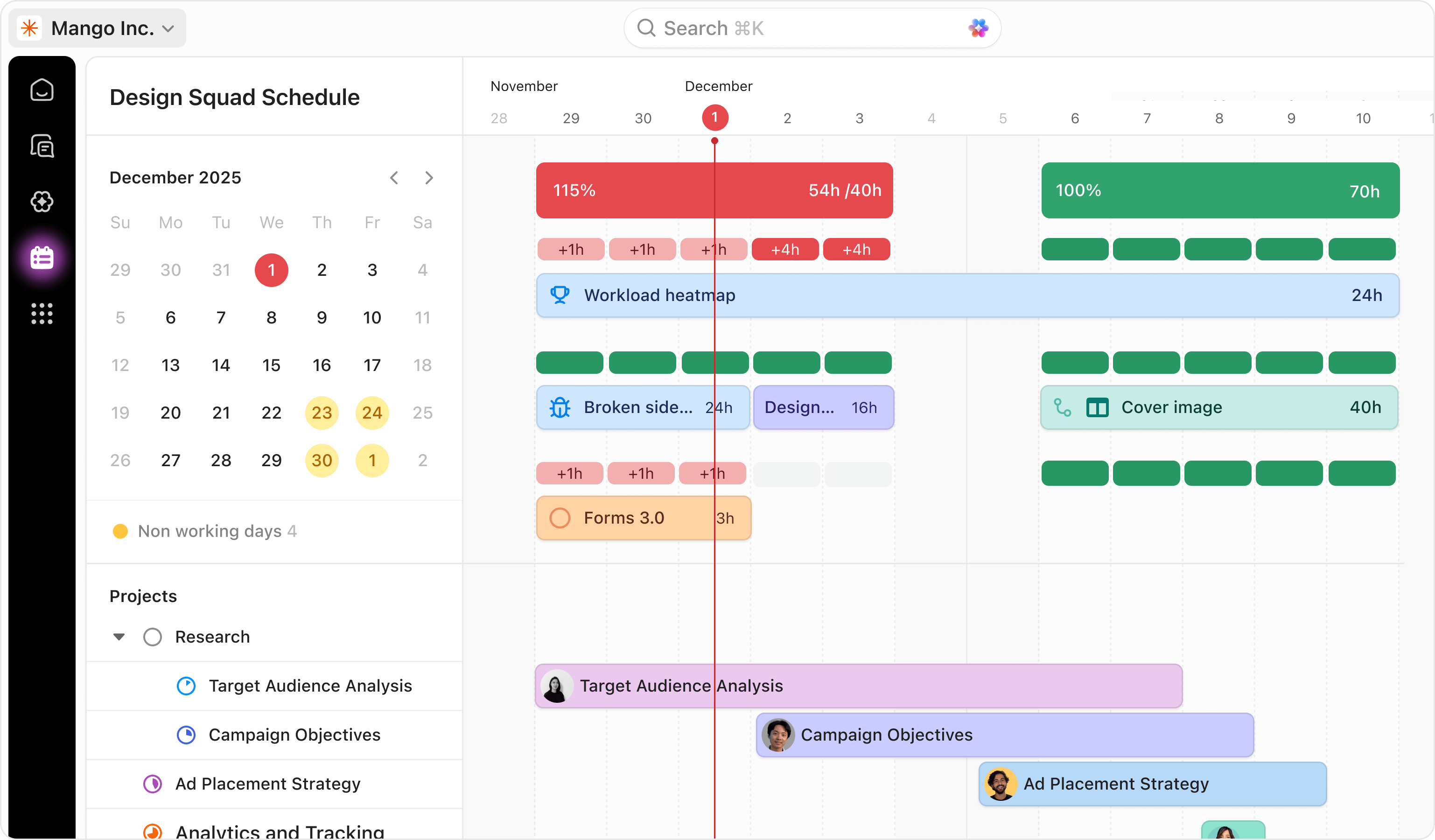
Claude in the daily motionCapacity, status and bottlenecks readable at a glance. The Monday question changes from where are we on this to what do we decide next.
For operators, not adminsAsk five people how work gets done and you will get five answers. That is not a people problem, it is a missing methodology. These are the rules we build into the workspace and train until they are habits.
Without it: The team spends more time finding work than doing it.
Without it: Everything feels urgent, so nothing is actually prioritised.
Without it: Quality depends on who did the work, not what the process requires.
Without it: The new system works for two weeks, then the team reverts.
Without it: Things slip, and nobody catches them until the client does.
Without it: You price on gut feel and learn you were wrong when the account churns.
Without it: Every new request breaks somebody's week.
Without it: Hiring decisions arrive a month after you needed them.
The design phase comes out of the Diagnostic and stands on its own. Everyone sees the same finish line before a single space is built.
A visual map of the entire structure: spaces, processes, handoffs, and how they connect. Your whole team sees the same finish line before anything is built.
Recorded explanations of what we designed, why, and how each role uses it day to day. The reasoning travels with the design.
How work flows from order to cash, from brief to delivery, step by step, so nothing falls through the gaps between teams.
What to build, in what order, and how long it takes. Scoped in the Diagnostic, fixed fee, agreed before we start.
The same person from design through build. No handoffs, no re-explaining your business to a new face every month.
Five steps, the same order every time. The design is the doorway: it comes out of the diagnostic, and everything after it is built once, properly.
We map how work actually moves today, then design the ClickUp structure on paper before anything is built.
The workspace built to the design: processes, templates, automation, AI in the flow.
Role by role, in their real work. Not a webinar. The habits that make it stick.
Migration and cutover, run with the team. One system, everyone in it.
The structure tunes as the business grows. Capability stays in your hands.
A great system does not just help leadership. It changes the daily experience of everyone on the floor.
The design is the only commitment. After that, three honest paths.
We take the design and build every piece: structure, automation, dashboards, templates, training. Your team steps into a working system.
Design through embedYour team does the work with our coaching and hands-on help where it counts. Capability transfers as the system goes up.
Your hands, our guidanceTake the wireframe, the walkthroughs and the roadmap, and build on your own timeline. The design is a complete deliverable in itself.
The design stands aloneNo. We work with teams new to ClickUp and teams who have used it for years and want to fix what is not working. The design starts from how your work moves, not from the tool.
We are a ClickUp partner and we resell it, openly. The protection is the order: the diagnostic reads how your work moves before any licence is discussed, and if your context calls for a different work layer, it will say so plainly.
Because the tool is a mirror. Build it on top of an unmapped operation and you get the old chaos with better fonts. We design the structure on paper first, against your operating model, then build once.
No. The design is its own deliverable. We can build it with you, alongside your team, or hand it over for your people to build. Most choose to keep us in the room, but that is a choice, not a trap.
You do. Your data, your processes, your automation. We build the capability so your team runs it without us, and the structure keeps earning after we leave.
Every engagement enters through one doorway: a diagnostic, not a tool. Begin with a free Impact Analysis, or go straight to the Diagnostic when you are ready.