

The instruments Claude

The Claude your business actually runs on

Claude is Anthropic’s frontier model, and the reasoning engine inside our builds. We turn it into work that gets done: judgement-heavy repetition automated with the reasons attached, embedded where the work already happens.

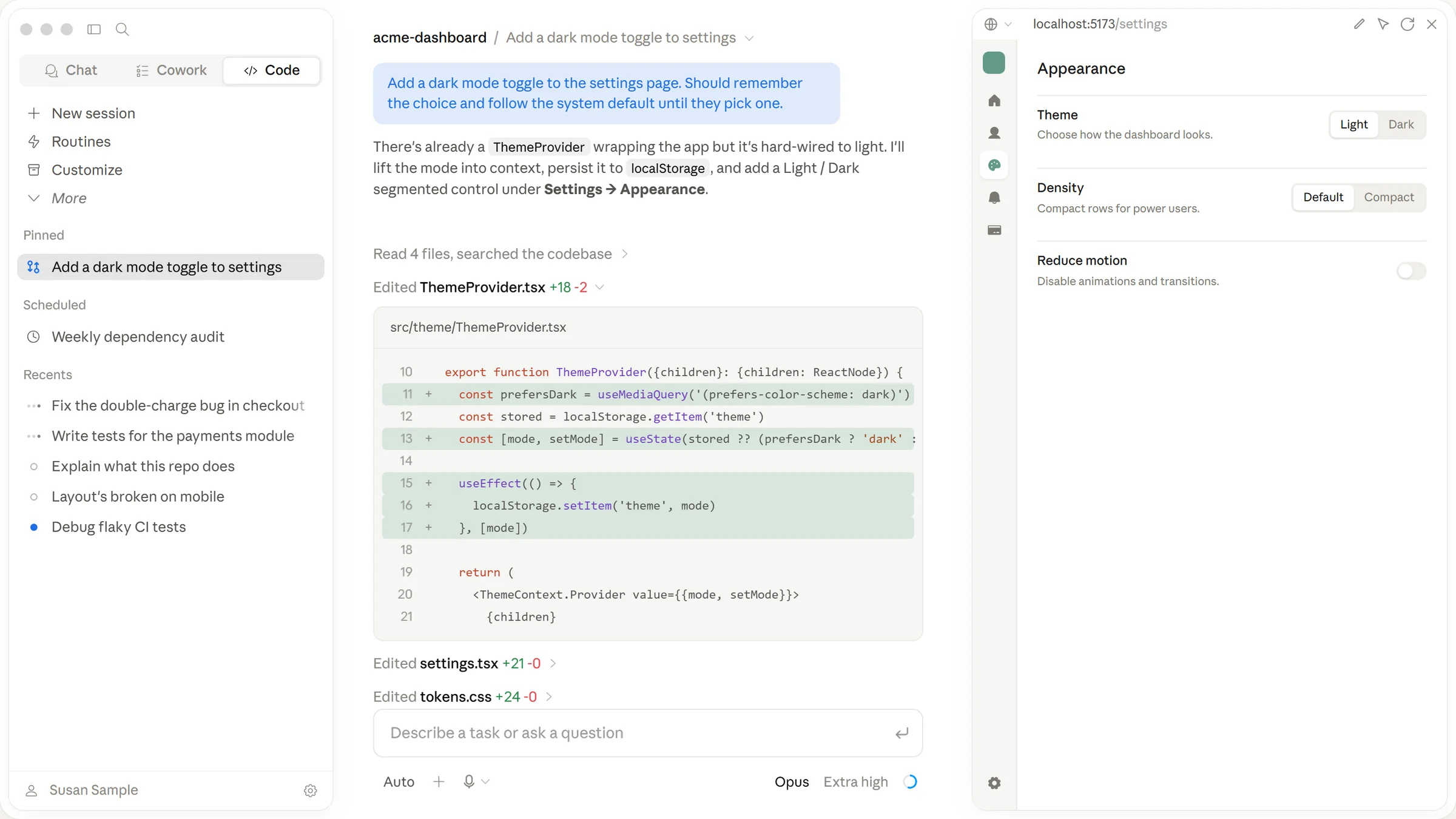
Claude Code in the desktop app: a coding session with the reasoning shown, an edited file diff, and the live app preview beside it
The hard truth

A model is not a strategy

The frontier is genuinely real. Your team can see the tools now, and the demos are everywhere. None of that is leverage yet.

A model becomes leverage only when it is translated into the workflow: built into the task, bounded by guardrails, and trusted by the people who act on it. That translation is the work.

The gap is always translation, not technology. The model is no exception.
— Hitesh Mahajan, Founder, Aidapt
Sound familiar?

The capability is here. The work still is not getting done

VisualsResponsivePrototypesFlowsComponentsModelingCompetitionGrowthCampaignsMarketsReviewsDocumentationDebuggingOptimizationTestingPatternsReportsVisualizationsQueriesProcessingEditingTranslationDocumentationMarketingEducationDesignBusiness strategySoftware developmentData analysisContent creationClaude
  • You have seen the demos. The gap is turning a clever model into work that gets done on Monday.
  • Pilots stall in a sandbox. Nothing reaches the people doing the actual work.
  • The team does not trust an answer it cannot see the reasoning behind.
  • Sensitive data and a public chatbot are a combination nobody signed off on.
  • Every team is trying a different tool, and none of it is built into how the business runs.
What we build

Claude, inside the work your team already does

The reasoning

Judgement-heavy work, with the reasons attached

Claude takes the repetition out of work that used to need a person every time: reading, drafting, classifying, summarising. It shows its reasoning, so your people keep the judgement and the model carries the load.

Drafting, triage, analysis
The agents

AI built into the task, not beside it

Agents that route, chase, draft and prepare work the moment it arrives. Built into the tools your team already opens, so nobody has to remember to use the AI.

Inside the workflow
The guardrails

Frontier capability, run responsibly

Clear data boundaries, named approvers, and a human in the loop where the call carries weight. The model proposes. The operator decides.

Governed and bounded
What it looks like

Claude, in the work

Not a chatbot in a separate tab. The frontier model, working across the codebase, the editor and the web, with the reasoning visible and a human in the loop where it counts.

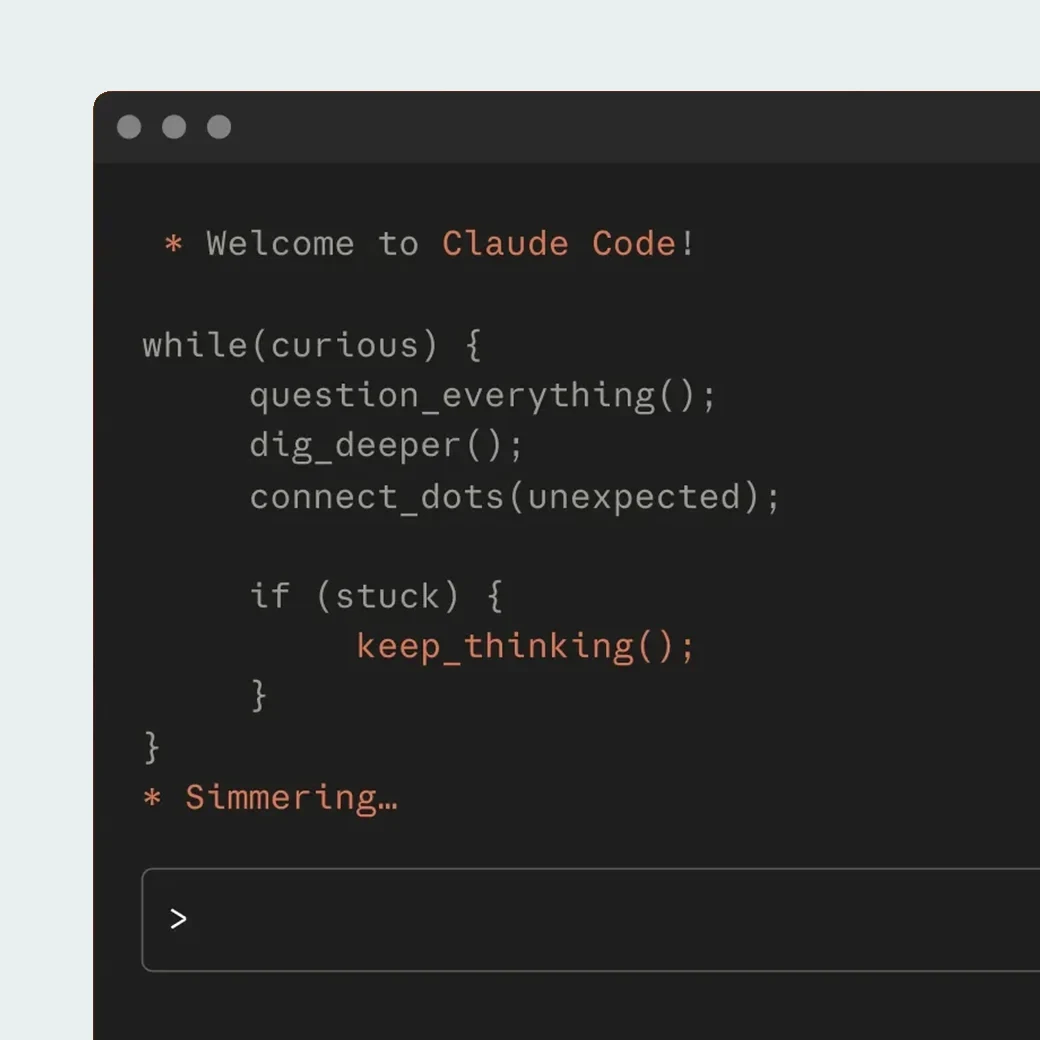
Claude Code exploring a codebase and explaining how it is structured, with its reasoning shown step by step
Claude works across the whole codebase, and shows the reasoning as it goes.
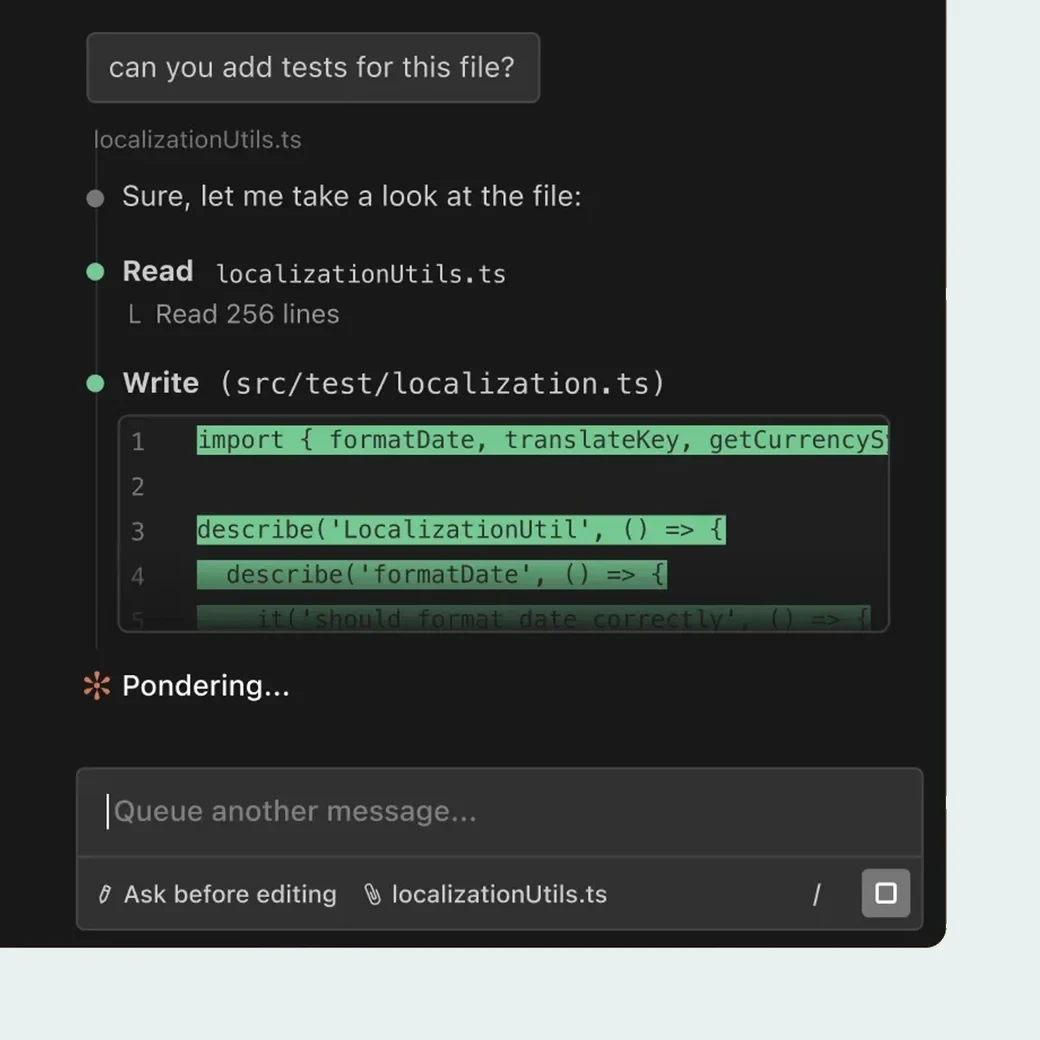
Claude reading a file and writing a test suite, asking before it edits
It reads, drafts and proposes, and asks before it edits where the call carries weight.
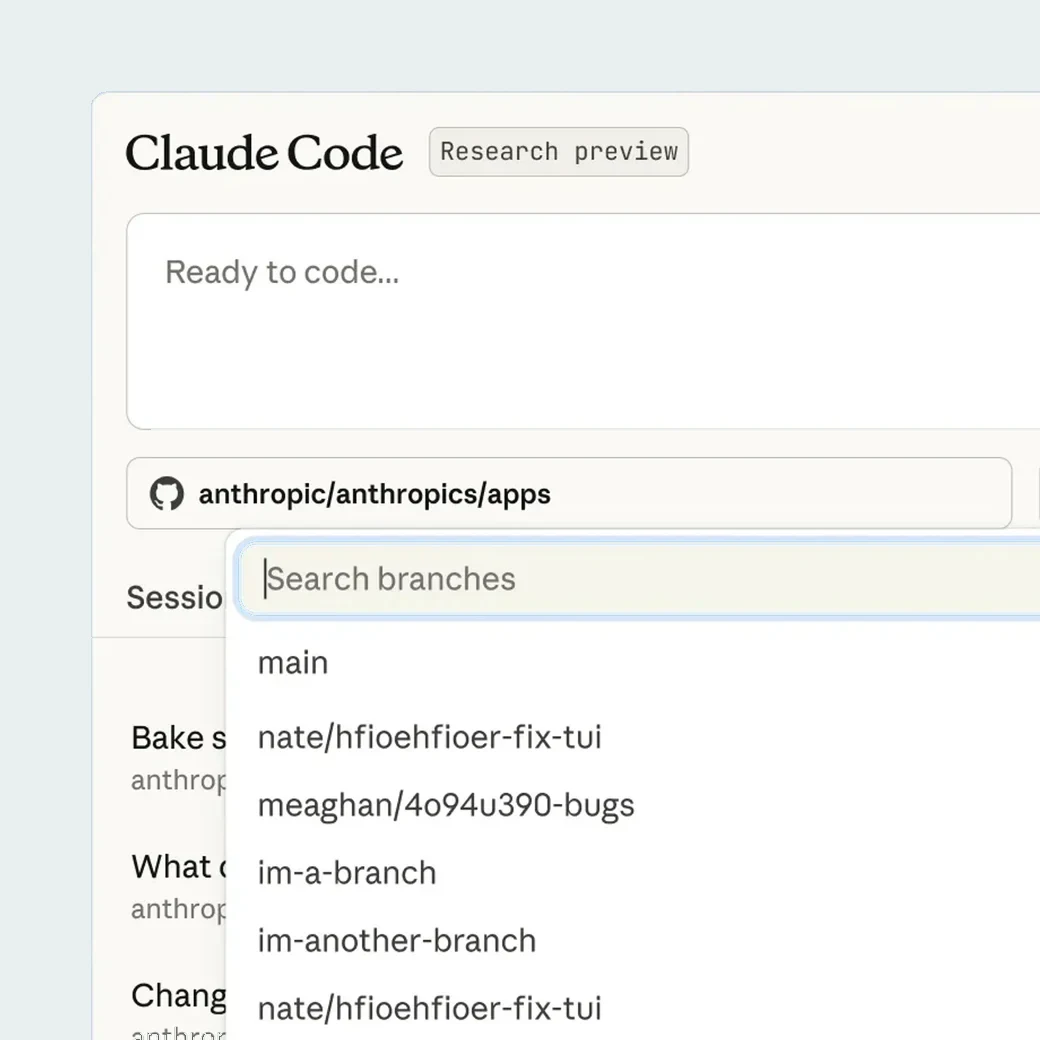
Claude Code running on the web against a GitHub repository
On the web or in the terminal, embedded where the work already happens.
Where it earns its place

High volume, judgement-repeatable, built into the flow

01

Back-office automation

Intake, classification, drafting and routing across service and operations, where volume is high and judgement is repeatable.

02

Decision support

Analysis and briefings that turn scattered information into the answer a leader needs, with the reasoning visible.

03

Knowledge in reach

Your processes, policies and history made answerable, so the floor stops hunting and starts deciding.

How it runs

Translated first, then built into the workflow

The same order every time. The diagnostic decides where the model earns its place before a single prompt is built.

01Translate

We map where judgement-heavy repetition lives, and where the model earns its place.

02Build

Claude built into the task: prompts, agents, retrieval and the guardrails around them.

03Embed

Into the tools your team already uses. The AI shows up in the flow, not in a separate app.

04Evolve

Tuned against real use, with the boundaries and approvals kept tight as it scales.

Fit

Transparency saves everyone’s time

A good fit when

  • You have work that is high volume and judgement-repeatable, not one-off bespoke calls.
  • An operator owns the outcome and wants the AI inside the workflow, not in a pilot corner.
  • You care that an answer can show its reasoning before anyone acts on it.
  • You want clear data boundaries and a human in the loop where it counts.

Probably not when

  • You want a chatbot bolted on, not the operation translated.
  • There is no owner for the outcome, only curiosity about the technology.
  • The work is pure bespoke judgement with no repeatable pattern to build around.
  • You expect the model alone to fix a process that was never mapped.
Common questions

Asked by operators, answered plainly

Is this just ChatGPT with a different name?

No. Claude is Anthropic's frontier model, chosen for judgement-heavy work where reasoning and guardrails matter. More to the point, the offer is not the model. It is the translation: the work of building it into how your business actually runs.

Why Claude and not another model?

Because the work we build is judgement-heavy and needs answers with the reasons attached. We choose the instrument per engagement. When the context calls for a different model, the diagnostic will say so plainly.

What about our sensitive data?

Data boundaries are designed before anything is built: what the model can see, where it runs, who approves. Frontier capability run responsibly is the whole point, not an afterthought.

Will it replace our people?

It removes the repetition, not the judgement. The model proposes and shows its reasoning. Your people make the call. That is why adoption holds.

Do we start with Claude?

No. Every engagement enters through a diagnostic, not a tool. We read how your work moves first, then decide where Claude earns its place.

Start here

Start with a translation, not a tool

Every engagement enters through one doorway: a diagnostic, not a tool. Begin with a free Impact Analysis, or go straight to the Diagnostic when you are ready.